

- Homage
- France
- Philippines
- Portugal
- Spain
- Taiwan
- Cannes 2025
Magellan
Magalhães
Credits
- Screenplay
- Lav Diaz
- Cinematography
- Artur Tort, Lav Diaz
- Production
- Rosa Filmes, Andergraun Films Albert Serra , Black Cap Pictures, El Viaje Films, Volos Films, T
- Cast
- Gael García Bernal, Ângela Azevedo, Amado Arjay Babon, Ronnie Lazaro, Hazel Orencio
Festivals
- Cannes
- Sydney
- Jerusalem
- New Zealand
- Toronto
- Busan
- Helsinki
- Jakarta
- Rio
- New York
- AFI
Language & Access
- Language
- French, Portuguese, Spanish and Tagalog original version
- Subtitles
- English subtitles
Synopsis
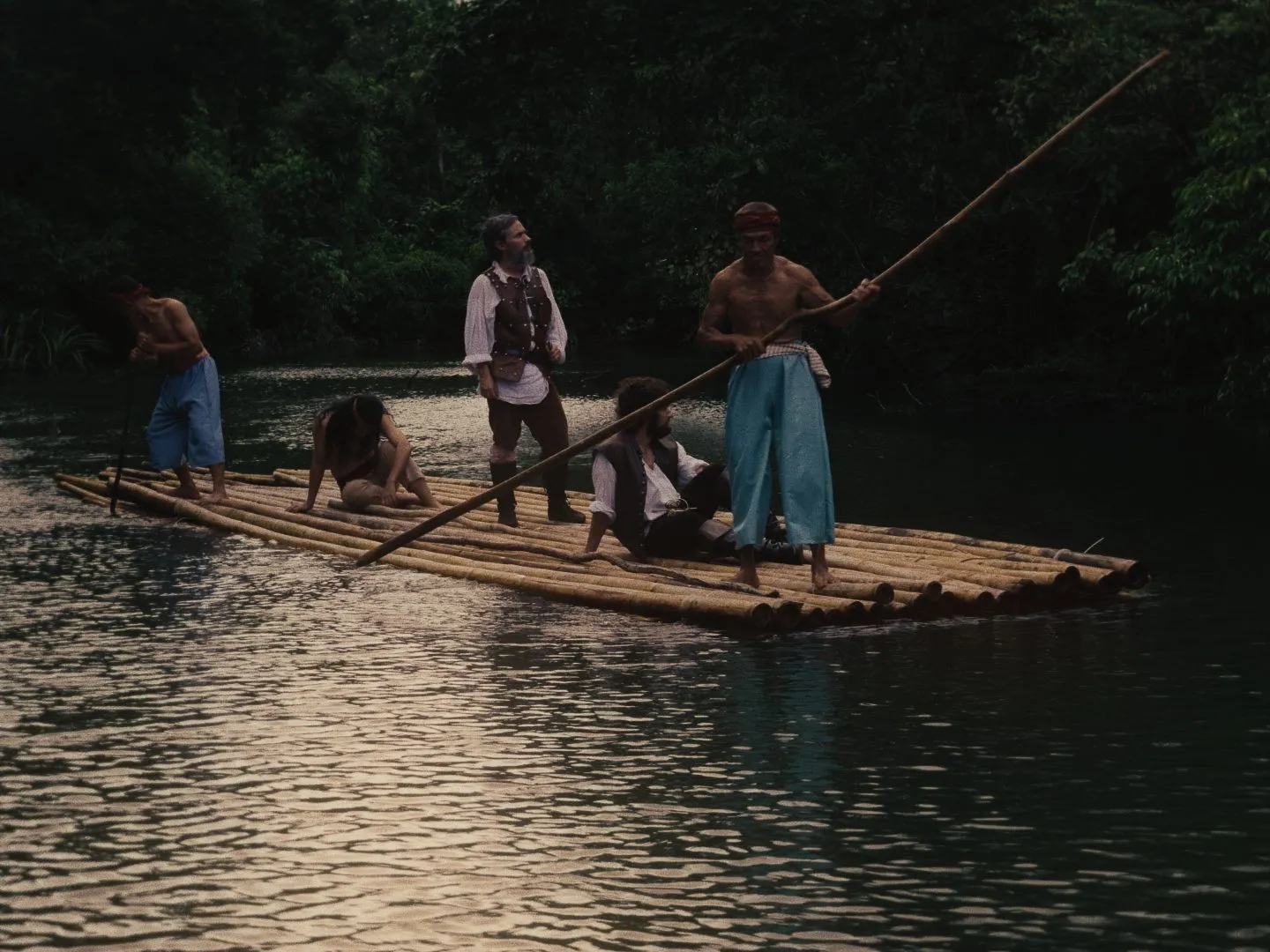
Lav Diaz, the singular voice of Philippine auteur cinema, is his country’s most radical chronicler — a master of stretched time who is happy to take ten hours and more to work through guilt and colonial history. With “Magellan” he now surprises us with something one could almost call a blockbuster: colour instead of black and white, 160 minutes instead of twelve hours, and, in Gael García Bernal, an international star in the lead for the first time.
But instead of a heroic biopic, Diaz sets out an unsparing deconstruction of the historical coloniser. The camera mostly shows Ferdinand Magellan at a distance, a figure among the forces of nature, while the actual perspective belongs to the colonised gaze: Enrique, a Malay slave, becomes the mirror of broken identities in the age of “discovery”. Diaz is less interested in the triumph of the voyage than in the devastation it leaves behind — massacres, forced conversion, uprooted bodies. Formally he stays true to himself: long, motionless tableaux in earthy colours, the creaking of the galleys, the rush of the wind.
“Magellan” had its world premiere in the “Cannes Premiere” strand and builds a bridge between radical slow cinema and international arthouse. That Diaz made this film now, of all times, in an age of imperial ambition among the world powers, makes it all the more charged: a monumental work about colonialism and violence — and unmistakably Lav Diaz cinema. No wonder the Philippines are submitting it as their Oscar candidate.
Festival
Shown at the 2025 edition of Around the World in 14 Films, Berlin.
Presented by

Nicolas Wackerbarth
Also in the programme
Sentimental Value

Nouvelle Vague

A Poet

The Chronology of Water
I Only Rest in the Storm
Romería
Die jüngste Tochter
Silent Friend
Orphan
Dry Leaf

Calle Málaga
Ein einfacher Unfall
Resurrection

A Useful Ghost

Yakushima's Illusion
Two Seasons, Two Strangers
Dracula
No Other Choice

Aisha Can't Fly Away
Der geheimnisvolle Blick des Flamingo

Zafari
Félicité
Gavagai